
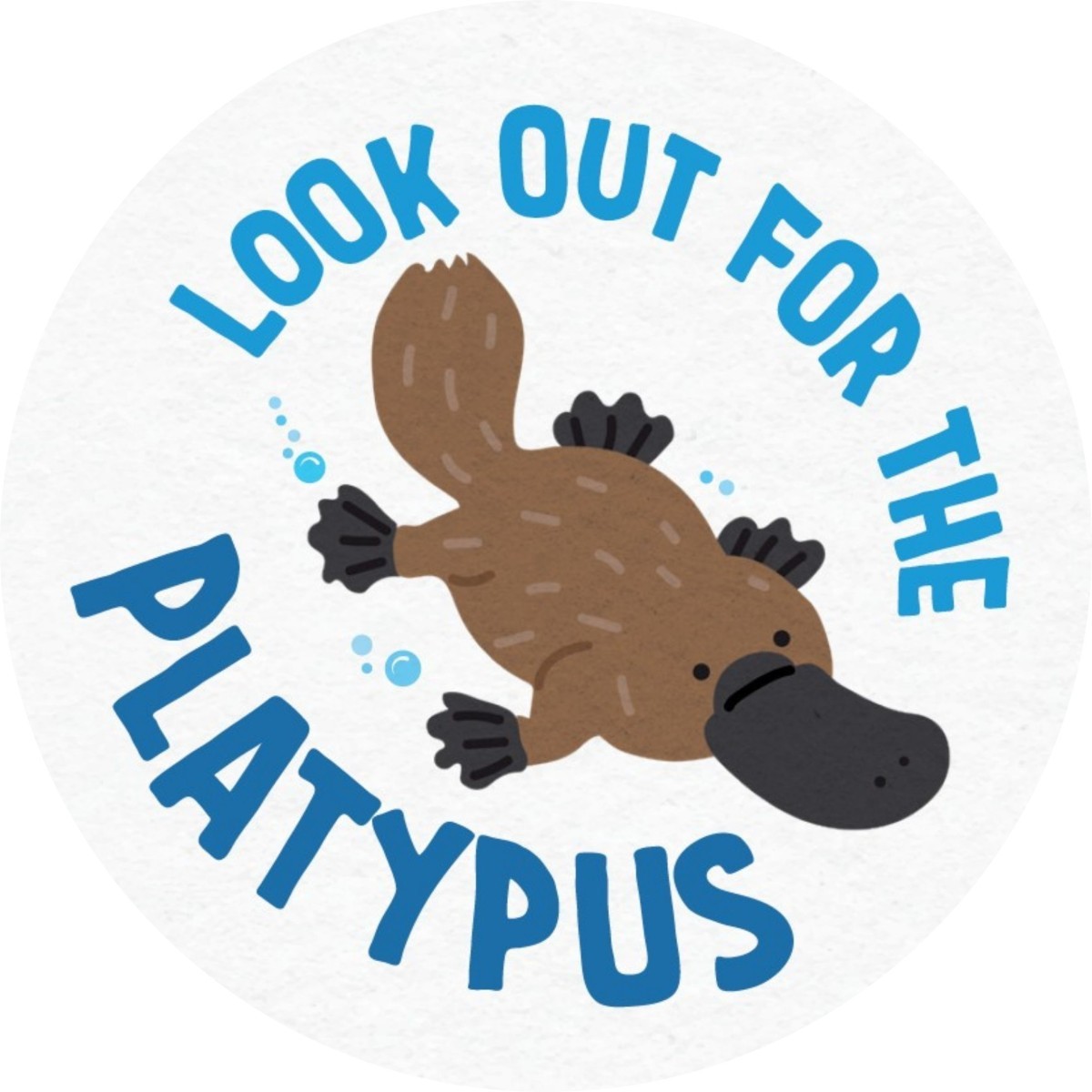
Australia's Most Unique Animal!
Platypus are a key indicator of a healthy waterway, eating sensitive waterbugs (aquatic macroinvertebrates) and relying on clean rivers to move freely.
They are an apex predator in freshwater ecosystems, only found in Australia. Known at a monotreme, platypus are one of only two mammals that lay eggs alongside the echidna. Platypus are a culturally important species to Aboriginal communities.
Protecting the platypus helps protect our waterways, wildlife, and environment.
How to spot a platypus
Best Times:
- Early morning
- Late afternoon and evening
- August - September is mating season
- December - February you may see young platypus out and about, days are longer meaning there are more light hours in the morning and evening for you to spot a platypus
Best Places:
- Calm freshwater creeks, rivers, ponds, with overhanging banks and still pools
Be still, quiet and wait:
- Sit and observe. Avoid noise and sudden movements
- It may take 30 minutes for the landscape to calm after your arrival and wildlife to feel safe to explore in your presence
What to Look For:
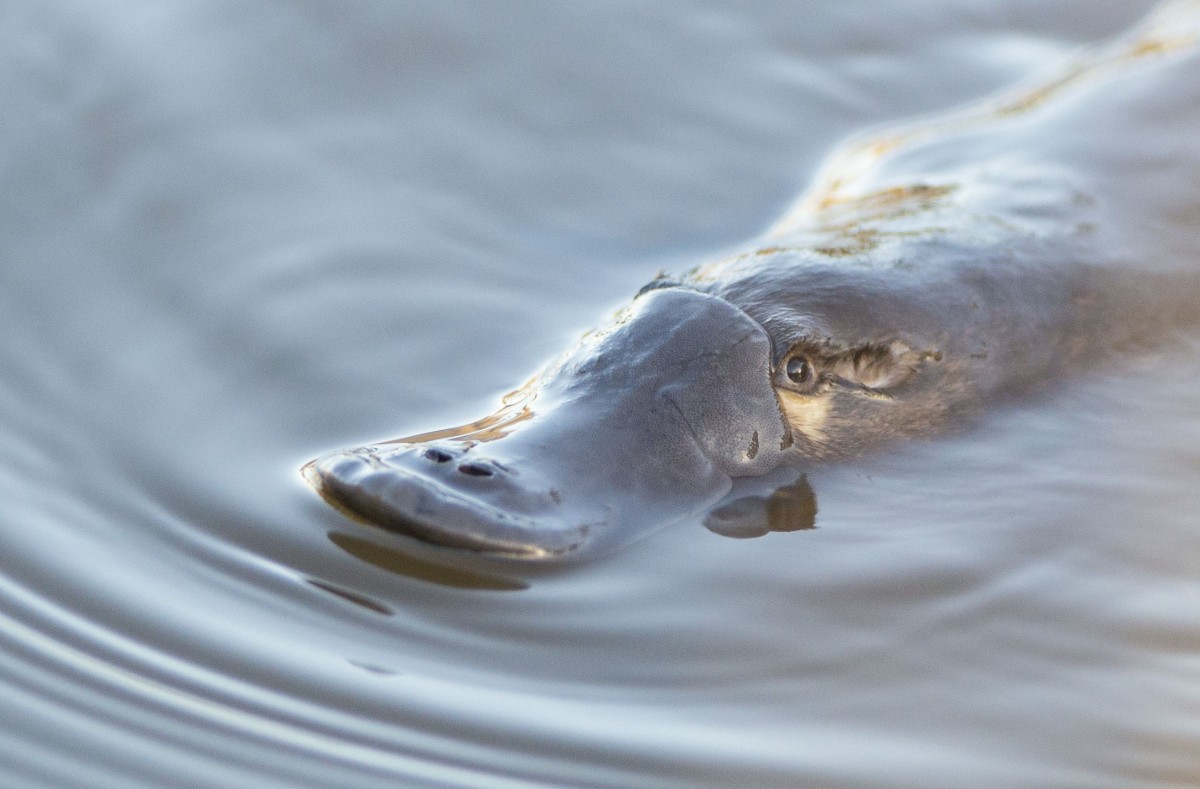
- Small brown animal floating low in the water (40-50cm long)
- Flat, paddle-shaped tail & duck-like bill
- Smooth, silent dive
- Circular ripples on the water surface
- Bubbles rising or a dark shape breaking the surface as they forage underwater
- Pops up for a breathe and to crush it's food close to where it dived (within 10–20 metres)
Threats to Platypus
- Habitat damage
Clearing of vegetation and riverbank erosion - Poor water quality
Pollution, chemicals and stormwater runoff - Climate events
Less food in dry periods and burrow flooding in big storms - Nets, traps and discarded lines
Enclosed illegal yabby nets and entanglements with fishing hooks and lines cause drowning - Rubbish in the river environment
Loopy litter, (e.g. hair ties, elastic bands, plastic rings) can entangle wildlife and cause injury - Introduced predators
Cats, dogs and foxes can prey on platypus
Record your sighting or attempted sighting
- Sat and observed a waterway for 30 minutes? Yes
- Saw a platypus?
- Yes / No / Maybe a Rakali?
All of this information is important! Recording sightings helps researchers track populations and protect habitat.
Have a platypus photo or video?
Report Sightings to Platy-Project - ACF
Don't have a photo or video? or think it might be a rakali?
Report Sightings to Australian Platypus Conservancy
Platypus Facts!
- They have webbed feet,
a duck-like bill, and a flat tail
used for storage of fat - A platypus closes its eyes,
ears and nose underwater - it
finds food using electroreception
(detecting tiny electric signals from
its prey) - Platypus have no teeth, they pick up sand
and rocks to help mash their food between
grinding plates in their jaws - A male platypus has venomous spurs on
its back legs - Platypus fur is extremely thick - up to 900 hairs per
square millimetre - keeping them warm in cold water - They can stay underwater for up to 2 minutes while
foraging - Platypus live for up to 21 years in the wild
- Babies are sometimes called platypups or puggles